
College of Criminal Justice Education
Bachelor of Science in Criminology
The Bachelor of Science in Criminology is a four-year baccalaureate program in criminology and criminal justice, aligned with CHED CMO No. 5, s. 2018.
Students study criminal law and procedure, law enforcement administration, crime detection and investigation, criminalistics and forensic science, corrections, and criminological research.
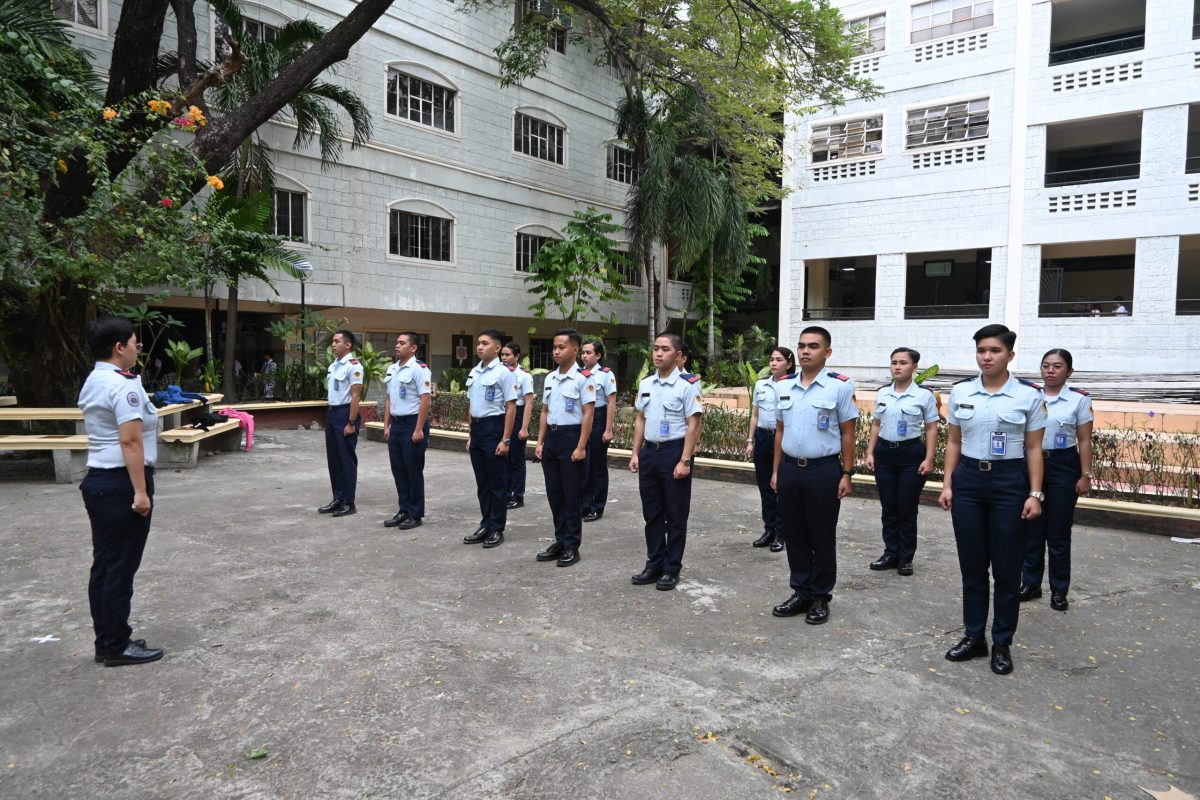
Laboratory work, scenario-based simulation, community engagement, and a supervised two-semester practicum build the practical competence, professional judgment, and ethical responsibility the field demands.
Program Overview
Length
4 years
Mode Of Study
Full-time
Location
Laguna
Diploma Type
Bachelor's Degree
Est. Cost
Career Opportunities
Criminological Research
Scientific Crime Detection and Investigation
Crime Prevention
Law Enforcement and Public Safety
Correctional Administration and Rehabilitation
Security Management and Private Investigation
Criminalistics / Forensic Practice
Academe and Training
What you'll learn
The curriculum is built on the minimum learning outcomes prescribed by CHED and the professional scope recognized under Republic Act No. 11131. Students develop competence in:
Criminal Jurisprudence, Procedure and Human Rights — the Philippine criminal justice system, human rights education, Criminal Law Books I and II, evidence, criminal procedure, and court testimony
Criminology, Victimology and Research — theories of crime causation, human behavior and victimology, professional conduct and ethics, juvenile delinquency and juvenile justice, dispute resolution and crisis management, and criminological research with applied statistics
Law Enforcement Administration — law-enforcement organization and administration, comparative models in policing, industrial security, operations and planning, inter-agency coordination, and crime mapping
Crime Detection and Investigation — investigation and intelligence fundamentals, specialized crime investigation, interview simulation, traffic and accident investigation, technical report writing, fire protection and arson investigation, vice and drug control, cybercrime, and environmental laws
Criminalistics and Forensic Science — forensic photography, personal identification/dactyloscopy, forensic chemistry and toxicology, questioned documents, lie-detection techniques, forensic ballistics, and evidence documentation
Correctional Administration and Rehabilitation — institutional and community-based corrections, therapeutic modalities, offender welfare, rehabilitation, and reintegration
Professional and Character Formation — communication, leadership, decision-making, ethical responsibility, nationalism and patriotism, teamwork, discipline, first aid and water safety, and supervised public-safety skills
Practicum and Community Immersion — a two-semester practicum connecting theory with supervised field experience, with documented learning and case-based integration
Ways We Teach
The BS Criminology curriculum follows a learner-centered, outcomes-based approach. The teaching-learning process is interactive, participatory, collaborative, and experiential, with faculty serving as mentor, facilitator, and collaborator.
Lecture and guided discussion — structured discussion of criminological theories, laws, criminal-justice systems, professional practice, and contemporary issues
Active and cooperative learning — role play, project-based learning, dialogues, concept mapping, think-pair-share, and group problem-solving
Return demonstrations and supervised skills practice — hands-on laboratory, identification, documentation, investigative, first-aid, and defensive-tactics competencies under supervision
Scenario-based learning and simulation — crime-scene, investigation, interview, report-writing, crisis-management, legal/court, and public-safety scenarios
Case analysis and evidence-based problem solving — analysis of cases, incidents, evidence, legal issues, crime patterns, and professional dilemmas
Research and reflective learning — criminological research, applied statistics, thesis presentation, self-assessment, critiques, and learning portfolios
Field exposure and community/industry immersion — exposure visits, community mapping, agency-based learning, and supervised practicum through approved institutional linkages
Partner Network
CHED CMO No. 5, s. 2018 requires practicum and community-immersion linkages with criminal-justice, law-enforcement, public-safety, correctional, immigration, probation and parole, and police/security training institutions. Strong, functional linkages are also a quality dimension emphasized in PACUCOA accreditation.
Accredited police and security training centers
Department of the Interior and Local Government
National Bureau of Investigation
National Police Commission
Philippine National Police and forensic units
Bureau of Fire Protection and local fire stations
Corrections and rehabilitation institutions
Probation and Parole Administration
Bureau of Immigration
YOUR NEXT STEP TOWARDS A SUCCESSFUL FUTURE
Take the first step toward your future at UPHS Biñan. Contact us for guidance and start your application today.